A few weeks ago I was all set to go to a fundraiser for a dear family friend. For a couple of months, I had planned on attending and had already spent the fundraisery-priced tickets. Why, then, did I drive all the way to the venue, turn around, and drive back home? I wonder how many other people would have done the same.
I should provide some context: I do not like dressing up or making small talk. I am also not a big drinker, and we all know alcohol can make small talk soo much easier, so this event was going to stretch my introverted self. However, I do love our friends Dante and Lucy and wanted to be there for them to demonstrate my support. Wanting to show up for friends and wanting to wear something both cute and comfortable are two very different things, though. While getting ready for the event, I tried on three or four different outfits (as I do EVERY TIME I go somewhere) and finally decided I looked “a little bit cute” in a colorful top, my go-to white jeans, and my new ooh-la-la Voile Blanche sneakers.

However, as I was riding by the venue and looking for a parking place, I happened to glimpse people standing inside and saw heels, wedges, dresses, and men wearing suits. Lord. Who knew there would be such a fancy dress code for a political event in little ol’ Wilson, NC, an event that did not even include a real dinner? I just wanted to hear Dante speak, not walk the red carpet.
I circled the block in order to ride by again and make sure I had seen the attire correctly. Yep, heels, wedges, dresses, suits. I turned at the next block again and headed home, crying the whole way and calling myself a loser and dumbass and having the most ridiculous ten-minute stream-of-consciousness harangue with myself.
Why don’t I ever know what to wear? How does everyone else know? Why do I even go to things like this? Why am I such a loser? Why do people like to dress up? How does everyone else look so stylish? Why can’t I find any clothes that look right on me? I am so stupid, stupid, stupid and fat, fat, fat! Nobody likes me. I bet no one will even notice that I am not there. No wonder my friends don’t call me! I don’t even know what to wear to a fundraiser. Who wants to be around someone who is not smart enough to pick out a stupid outfit?!
I was really hard on myself and downright ridiculous. If I had not already gone way past menopause, I would have sworn I had a serious case of PMS. I really cried. A lot. At the stoplight, I kept my face averted so the person beside me would not see me and feel compelled to save me from some seemingly traumatic event – or at least offer me some tissue through the window.
Lordy. In hindsight, I realize there was much more going on than feeling a little underdressed at a social event.
I sometimes suffer from a “disease” that I had never even heard of until my daughter did a presentation on it when she was a freshman at Duke. I (sometimes) have impostor syndrome. According to my in-depth, scholarly research (consulting Google, Hoda and Jenna, and Michelle Obama’s memoir), impostor syndrome, simply put, means feeling that we don’t belong, that we are impostors. (And by the way, even the word “impostor” has two identities because no one can agree on how to spell it!) Michelle Obama says, ”If you’ve been told you’re not good enough, when you’re in a [certain] room, you might think, ‘Why am I here when I’m not good enough?’” She says women particularly feel this way because throughout history we have been told we don’t belong in certain arenas or in certain jobs.
Impostor syndrome is like secretly thinking we don’t have what it takes to do a certain job, even though our resumes clearly impressed the person hiring. Obama said her syndrome seemed to stem from an encounter with a school counselor who told her she was not “Princeton material.” Obviously, she was. She did quite well at Princeton, but while there, she never really forgot that one person’s perception of her and worked so hard to prove herself – to herself. Now, I will be honest and say that Betty Abernathy told me I “did not belong” in her Honors Chemistry class when I was in eleventh grade, but I was not scarred from that experience. I knew she was right! However, I was going to take that class because that’s where my friends were, and yep, I’ll take that C-, Mrs. Abernathy, thank you very much.
Signs of impostor syndrome include lack of self-confidence, self-doubt, feelings of inadequacy, negative self-talk (“I am a loser!”), anxiety, dwelling on the past, and constant comparison to other people (“How does everyone else manage to look so stylish?”). It can even manifest when we take on more tasks at work just to prove ourselves and to fit in or when we don’t apply for jobs if we do not meet every single requirement. And sometimes we even shrug off our accolades, as if we don’t deserve any recognition. We wouldn’t allow our best friend to be this way, but we allow ourselves to.
I have realized that I feel like an impostor in other situations besides those that involve wearing fancy clothes. Like…when I call myself a writer. Can I really be a writer if I haven’t gotten paid for writing? I also feel like an impostor as the newest Board member of the Wilson County Public Library. (How am I supposed to know if the budget looks right or not? What am I supposed to say at these meetings? I just love books and libraries!) Even as an adjunct professor with more teaching experience and just as many years of graduate work as many other professors, I didn’t feel I measured up. I remember feeling the same way when I went to Governor’s School as a sophomore back in 1979. The criteria for Governor’s School are pretty competitive and include faculty nominations, SAT or ACT scores, IQ scores, and, because I went for dance, a serious audition in Winston-Salem in advance. Even though I was selected, I never felt I should have been. Everyone is so smart and loves it here. I just want to be at home for the summer!
If I look at Michelle Obama’s example, I suppose my feelings of “not good enough” started way back…probably when I heard my friend Kim’s step dad telling her, “I TOLD you not to hang out with these public school people! They are trouble!” – when really, she was the one who came up with the idea of sneaking out of her house that night. She was the one who had already done it several times before. I knew deep down he was wrong about me. I knew I wasn’t the reason we snuck out of her house. But still, the “public school” comment stuck with me and made me feel not good enough…even decades later when I was about to sashay up to the Wilson Arts Council for my friend’s fundraiser.
Supposedly, most people have suffered from impostor syndrome. In fact, since the term was coined by Pauline Clance and Suzanne Imes in 1978, about 70% of people have reported experiencing it. I recently heard Tom Selleck admit on “CBS Sunday Morning” that when he was a young actor driving to his next gig, he had to tell himself constantly, “You are enough.” Good Lord. If Tom Selleck and Michelle Obama have felt impostor syndrome, I am in good company, right? Actually, it is often high-achieving people who experience it. I feel better knowing that. According to Susan Albers, a psychologist for the Cleveland Clinic, “Even Einstein thought his research got way more attention than he thought it deserved!”
Pretty much everyone has felt like a fake or failure at some point, I bet, and we all compensate in different ways for that feeling. Some people sign up to do too many things. Some might avoid doing anything to attract too much attention. Some people feel so much stress at work that their job performance suffers. Some people become consumed with anxiety and depression. Some, like me, turn the car around and go home rather than hanging out with friends at a fundraiser. Or write about it.
There are so many ways to overcome impostor syndrome, though, according to Dr. Albers. Something like separating facts from fiction (Did “everyone else look stylish,” or did I really think they were a bit overdressed? hehe) is one way to start. What is true, and what are we making up in our own heads? Keeping reminders of our achievements is a good idea, too. If a coworker or a student or a child writes a note about something we did well, save that note! We might need it for affirmation one day. It is a way to remind ourselves we do deserve this; we earned it. No, I don’t get paid for writing, but I get paid for teaching writing, and just this week a former student who just graduated from college told me I “made” her freshman year when I was her English professor. And, both of my children tell me often how much they love reading my writing and are so glad they can learn more about me from it. That is worth more than money to me. All of these are reminders that I am definitely not an impostor.
For me, the one tip that resonates the most is to stop comparing. I know that “comparison is the thief of joy” (Thank you, President Teddy Roosevelt and quotes.com), but I must have temporarily blocked out that kernel of wisdom or something. I had thought the outfit looked just right – cute, even – until I compared it to others’ clothes. Maybe those dressed up people would have done the same had I allowed them the opportunity to see my outfit that night. (Dang, she looks cute in those sneakers!) Maybe they would have actually admired my style, my authenticity, my confidence, and (of course) my comfortable shoes.
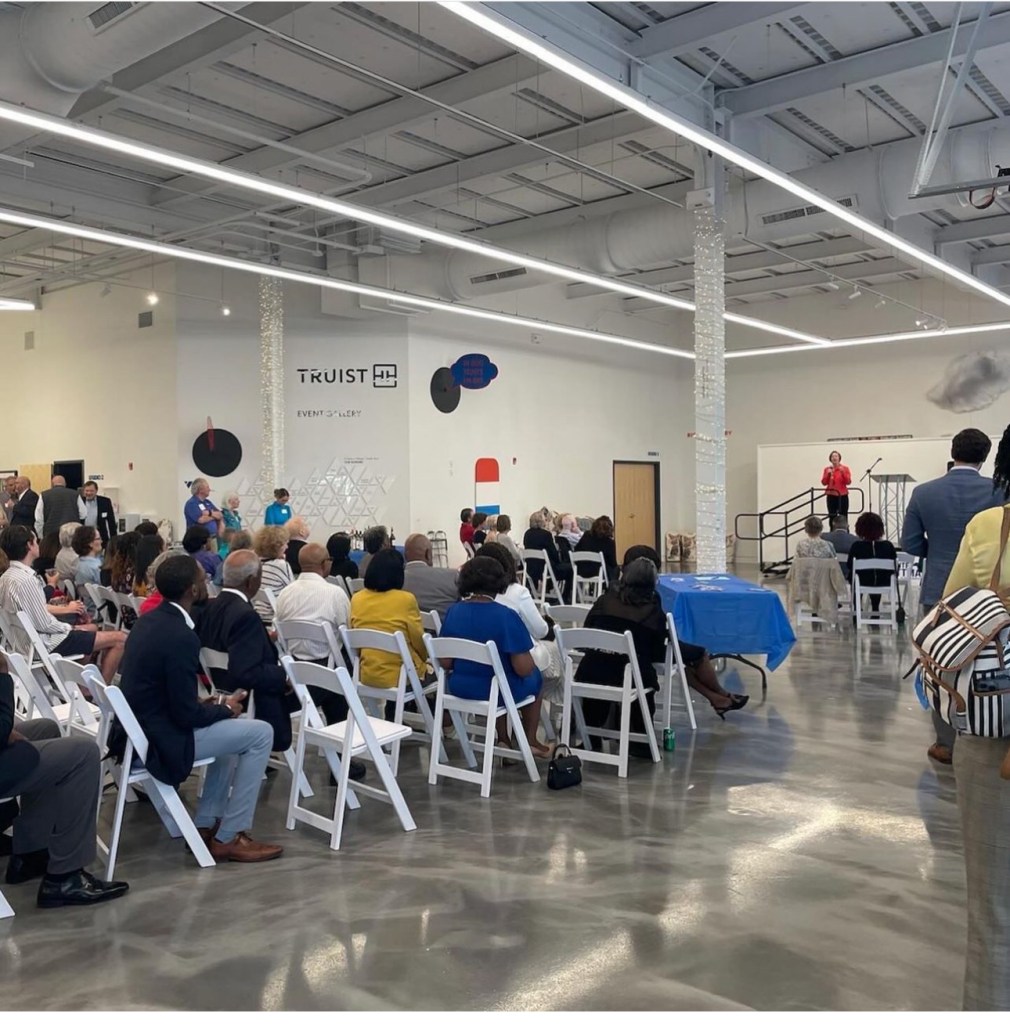
Having temporary impostor syndrome made me miss out on an important event for a friend, and when I later saw empty seats in this picture, I was angry with myself. People have so many real struggles in life, and I was worried about what I was wearing? That is not the person I want to be. I want to be the one who sits in the front row, cheering and supporting my friend. Next time my seat won’t be empty. I deserve that seat as much as anyone else in that room.
 Teach and Beach
oh Kathy! Be yourself and BE GOOD IN WHO YOU ARE! You have your own style, embrace it! You are loved by many…sweet neice..
it’s past time to stop comparing yourself to others…you are good/great just like you are! WEAR IT everywhere you go and shine your light! It’s bright!
LikeLike
Thank you, Tammy!
LikeLike
Please take it as a compliment that what I thought after reading this is, “I didn’t know Kathy went to Governor’s School for dance! Cool!” ☺️ We ALL feel Imposter Syndrome, women more often than men. What has the world done to us that post-menopausal women still give a rip what people think?! I’m a recovering imposter, so let’s be in recovery together!
LikeLiked by 1 person
Yes, let’s do!
LikeLike
Please take it as a compliment that the first thing I thought after reading this was, “I didn’t know that Kathy went to Governor School for Dance! How cool!” We ALL feel Impostor Syndrome, and women much more often than men. What has society done to us that we still worry about what other people think!?! I am a recovering imposter, so let’s be in recovery together!
LikeLike
Please take it as a compliment that my first thought after reading this was, “I didn’t know Kathy went to Governor School for Dance. How cool!” We ALL feel imposter syndrome, women more often than men. What has society done to us that we still worry about what other people think?! Ugh! I am a recovering imposter, let’s be in recovery together!
LikeLike
I cannot imagine that YOU, First Lady, have ever been an impostor, but I would love to be in recovery with you anyway!
LikeLike
You’re always cute and stylish to me but believe me I am an impostor also! Mine stems from anxiety and feeling like I’m never quite good enough! I love reading articles and this one hit home! Thank you for sharing!
LikeLiked by 1 person
Thank you, Angie! You are a sweet, beautiful, dear friend.
LikeLike